On Undergraduate Essays, in Imitation of Alexander Pope

ScanFor a few months now, I’ve been working as a seminar tutor for first year English Literature students. It’s really satisfying – they’re lively, engaged, and the teaching itself appeals to my theatrical side. I love getting to shout, wave my arms, say outrageous things to spark arguments, and demonstrate why poetry and literature matter. The only bad parts of the job are the long hours dedicated to marking and essay coaching – trying to get the students to understand the difference between active and passive voice, or master the particularly recondite subtleties of Cardiff’s referencing system.

I was preparing a seminar on Alexander Pope’s The Rape of the Lock the other week, and browsing through his Essay on Criticism, which is still the best – and funniest – introduction to his writing. Then I started wondering – what if the famous eighteenth century satirist had to write undergraduate essay advice? What would that sound like?

It was a slow weekend. The couplets sprang to mind in great profusion, and before long I had threaded them together in a coherent order and printed them out for my seminar, who were delighted. I share them here, edited for general use. If any fellow teachers stumble across this, feel free to use them and – if you have any talent for metre – adapt them to your institution’s own essay writing foibles.  Altering the list of modern critics to flatter your academic supervisor/mentor is highly recommended.


On Undergraduate Essays.

In Imitation of Alexander Pope’s Essay On Criticism.
By Thomas Tyrrell

The Essay! The invention of MONTAIGNE,
With whose familiar style the form began,
Where BACON’s scientific method rose
Among the varied beauties of his prose,
Where JOHNSON’s pen, august and lucid still,
Surveyed mankind from China to Brazil,
And ORWELL, in a plain yet brilliant style
Exposed the flaws and glories of our Isle,
While GREENBLATT, WILSON, EAGLETON, and BATE,
Are modern critics of the highest rate.
To these heights, O my seminar, aspire!
Permit no mild critique to damp thy fire,
For academic essays stand alone,
Requiring a restrained and formal tone,
That demonstrates how well you understand
The complex meanings of the text in hand.
To science students it may seem absurd,
How hard we labour over every word,
But all will be rewarded! For, in sum,
Master the basics! And the rest will come.
Lest your assessors should be justly vexed
Be sure to match the author to the text;
Answer the question that you have been tasked
And not the one you think they should have asked;
And lest you should the Stagyrite offend
Have a beginning, middle and an end.
Show no false bias, but be circumspect,
Also incisive, learned and direct;
Spelling and grammar must be quite correct.
A semi-colon in its proper place
Will bring a smile to every marker’s face;
Misplaced apostrophes and comma splices
Will be regarded as the worst of vices;
In case, before the end, the reader drops
From want of breath, be generous with full stops,
Rather than hold them as your last resort.
No sentence is marked down for being short.
To use contractions is accounted bad;
Instead of ‘they’d’ make sure you put ‘they had’;
‘I used the active voice’ should be your plea,
And not ‘The passive voice was used by me.’
In introduction to your essay, lay
Out clearly all the things you wish to say,
And having set these limits, do not stray.
But now your argument begins at last!
Now analyse, unpick, compare, contrast,
Contend, defend, explain – but chiefly THINK,
Vague generalising is a waste of ink.
So never be afraid to quote at length,
Well-analysed quotations are a strength:
Essays are weary, parching, dry and bland;
Quotation are oases in the sand.
Yet every time you quote, within the course
Of writing out your essay, give your source:
Naught is more rare, nor pleasing to the sight
Than someone who has got their footnotes right.
Citation styles there are in wide array,
Harvard, Chicago, and the MLA;
To make your essay pleasing to the view,
Hold fast to these! And they shall see you through!
So ultimately, to conclude, therefore
In summary – conclusions are a bore;
A place to say again things better said before.
If these important precepts you obey,
And breathe life into them upon the way;
If all your arguments prove firm and just,
Your grammar faultless and your style robust;
High marks in modules you may hope for then,
Nor fear the wielder of the crimson pen!
I Jump Lights

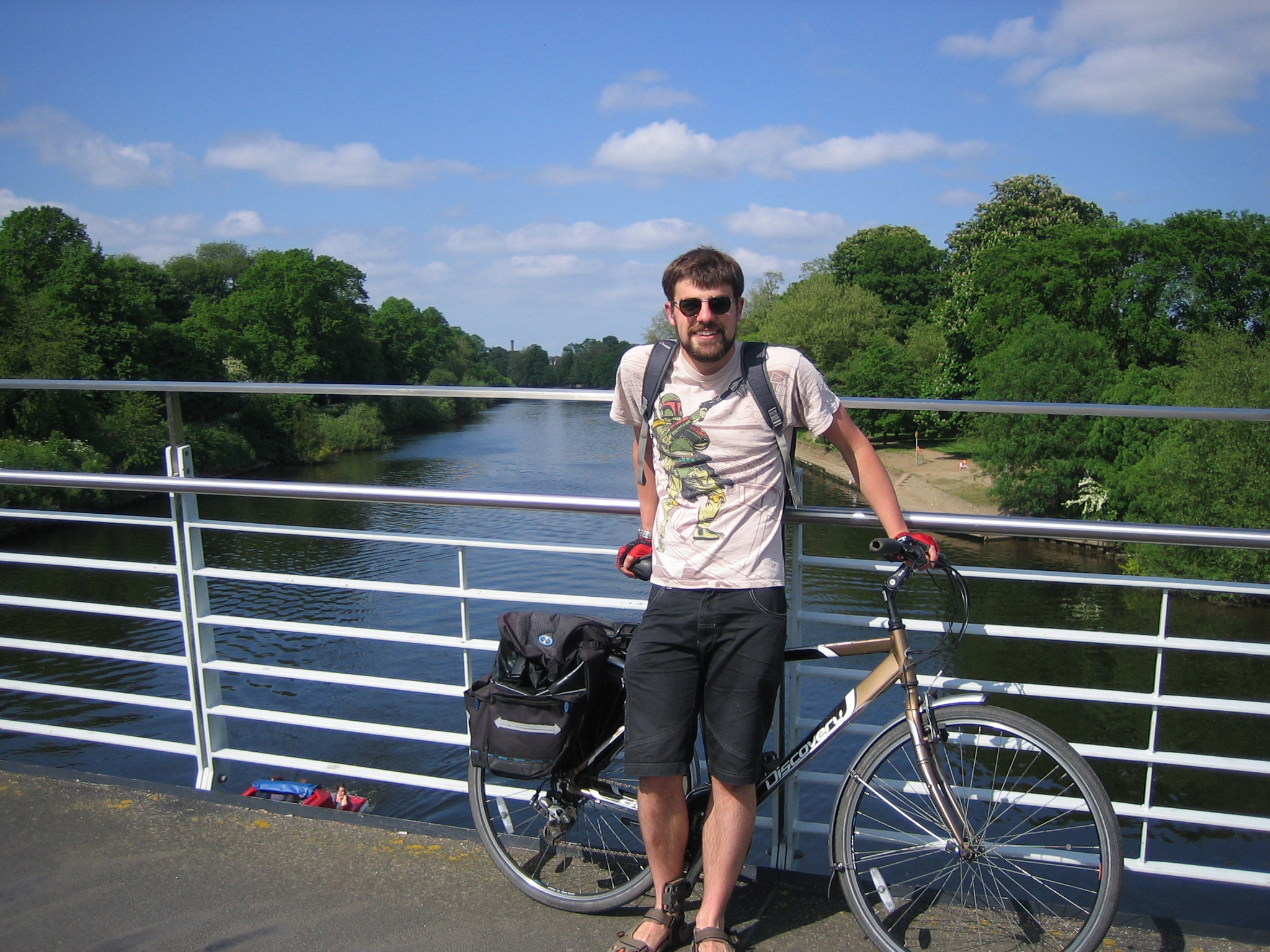
IMG_4197I’ve been cycling to school or to work on a daily basis since I was fifteen. One year, I even held a part time job as a bicycle courier, and cycling became my work. Along the way, I’ve built up the usual set of pet hates. I can’t stand people who cycle on the pavement when there’s a perfectly useable road – especially if they’re riding those stupid chopper stunt bikes. I’ve never minded people who don’t wear bicycle helmets – I personally wear one most of the time, but there’s no law against it, and I don’t believe there should be one. On the other hand, I think people who don’t use bike lights are suicidal idiots – and if I’ve been caught out by my own absent-mindedness and the encroaching winter dusk, I’ll be sure to kick myself thoroughly before cycling carefully home.

Most controversially – and I know I will incur the ire of pedestrians and motorists by saying this – I will jump the occasional red light, where I judge it safe and convenient to do so. Such occasions include, but are not necessarily limited to: when the pedestrian crossing is in use, when it is possible to join the flow of traffic from the side without disrupting it (i.e. at a T-junction) and when there’s self-evidently no-one coming.

If there’s a crusty old pedestrian around to say ‘It’s a red light for you too, you know!’ or a taxi to honk at me – well, I’m afraid that only increases the intolerable sense of smugness that makes us cyclists so generally reviled.

Bella Bathhurst coined a wonderful term for the bicyclists of Britain – feral cyclists. Historically, we were never given much attention, or government provision – we simply got on the roads and started duking it out with the traffic on the traffic’s own terms. Anyone who’s ever had the (still occasionally terrifying) experience of being overtaken by a bus or lorry knows how unequal that engagement is – yet still, we persisted. Nowadays, there are a few more bike lanes – sometimes even dedicated bike paths – but the sensation of being an underdog persists. And as underdogs – where it be the delight of zipping past a full lane of stationary traffic, or cycling with our hands in our pockets, or jumping lights – we’ll take any advantage we get. After all, bicycles are more manoeuvrable than cars – bicyclists can see more – and if a bicyclist collides with a pedestrian, the outcome is likely to be annoyance, at worst minor injury, not fatalities. I’ve never collided with anyone yet, and don’t see it happening unless the bicyclist is being an absolute speed demon and the pedestrian isn’t looking where they’re going.

Part of the effort to cut down on bicycle fatalities is getting cyclists to assert our place on the roads – to stop cowering in the gutters, ready to be knocked silly by the first car door, and ride proudly in the middle of the road. If anyone wants to overtake us, it’s their problem, not ours. I’m careful to judge each case on it’s own merits – I’m no adrenalin junkie – but until we’ve reached the utopia of fully segregated car and bicycle systems, I will continue to jump the occasional traffic light, however much non-cyclists may look down on the practice

Short, Sweet Stories

Controversially, my local library has now relegated short stories to a section by themselves. While it’s nice to have somewhere to go if you only want to read short stories, innumerable questions arise. Will it be a multi-generic mingling of Asimov, Clarke and Heinlein, with Sherlock Holmes, Father Brown, James Joyce’s Dubliners and Dylan Thomas’s Portrait of the Artist as a Young Dog, or do the genre works go elsewhere? What about works that were serialised as short stories, but were collected as novels, such as Asimov’s Foundation and Sax Rohmer’s The Insidious Dr Fu Manchu, both of which, later in the series, eventually morphed into novels? Shelve them apart or together?

Most of all, there’s the worrying notion that this might ghettoise the short story, which is fast following poetry into a little-bought, little-read, uncommercial sideline. Mostly Joyce’s fault, I feel, for making the short story so damned literary, together with the boom in Creative Writing for flooding the market with hundreds of early literary writers working painstakingly up from the short story collection to the semi-autobiographical novel to Ulysses! Me, I wrote my first novel at 13 (a terrible fantasy knock-off) and when I write short stories, it’s generally a horror story for reading around the campfire during a hiking trip. It may be terribly pulpy, but it’s more fun than any writing group.

I’ve decided to do my small bit to revitalise the art form and hence, I’ve collected and recommended half-a-dozen writers whose short stories are fun, pacey, and not altogether lacking in literary merit. I’ve tried to steer clear of the obvious genre writers, but even so, here you’ll find vampires, murderers, and devils a plenty, together with ‘real world’ stories just as entertaining.


Jane Austen

Her short stories are the most overlooked works in Austen’s extraordinary oeuvre – many of those who have read her novels time and time again will never even have glanced at her Juvenilia – the unruly, mocking, anarchic works of her teenage years. The sly sense of humour that continually undercuts her writing style – and which is so often lost in the po-faced costume dramas – runs riot through these 26 (often very short) works, which are like nothing in the eighteenth century and very little in the nineteenth. The History of England… By a partial, prejudiced, and ignorant Historian anticipates 1066 and All That by more than a century; in Edgar and Emma we have Austen’s only murderess; in The Beautiful Cassandra an entire novel condensed down into a sentence or two per chapter. The invention and energy is such that by the time we reach the final item in the book, Catherine: or The Bower, which displays the mature Austen’s more sedate style, it’s almost a disappointment.

Stand Out: The innocuously titled ‘A Collection of Letters’; each one more hilarious than the last.


Sir Arthur Conan Doyle 

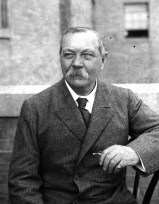
Most famous for his peerless consulting detective, A C-D’s second best-known creation is probably Professor Challenger, who led a dinosaur hunting expedition to a plateau in South America in the Victorian Jurassic Park. His other works are mostly forgotten. The one that least deserves to be is Brigadier Gerrard, a hilariously vain, dashing and none-too-bright French Hussar, on the frontline of Napoleon’s Army during all his various campaigns. The writing is so vivid and modern, that although it was a clear inspiration to George MacDonald Fraser’s Flashman series, it feels more like a modern rival. His two entries in the volume of Late Victorian Gothic Tales show he can tell a spine-chiller with the best of them: ‘Lot. 249’ is one of the earliest and best of the mummy stories, and ‘The Case of Lady Sannox’ is a tale of dreadful cruelty to rival Edgar Allan Poe.

Stand Out: It’s hard to choose a favourite from a writer whose work spanned detective, historical, horror and early science-fiction stories, adding something new to each. Of his isolated pieces, however, ‘The Captain of the “Pole-Star”‘ best rewards rediscovery.


Rudyard Kipling

‘Once upon a time, O best beloved…’

Those words were such an integral part of my childhood that even now they nearly bring me to tears. Where Conan-Doyle spans the genres, Kipling spans the years. The Just So Stories, The Jungle Book, Puck of Pook’s Hill and Rewards and Fairies should be indispensable companions to any childhood. He often gets a bad press for his uncritical view of the British Empire, but he knew India backwards, and his works are full of colour and local knowledge.  ‘The Man Who Would Be King’ is a thrilling adventure story, but also a vivid tale of Imperial hubris, while ‘Lispeth’ is a tragic inditement of colonial attitudes. His horror stories, collected in Strange Tales, span continents and time-scales with ease. Despite the uneasy racism, ‘At the End of the Passage’ is a doppelgänger story to stand alongside The Strange Case of Dr Jekyll and Mr Hyde.

Stand Out: How the Whale Became displays more than any poem Kipling ever wrote his absolute mastery of rhythm.


Dylan Thomas

Every previous writer in this list was also a poet, but for Dylan Thomas prose was obviously a second string. To be honest, that comes as a relief. Many of his tangled, intricately crafted poems can take hours of study to decode, but his short stories are a lot simpler and easy to get a handle on. The stories in his first collection, The Map of Love, came bundled with his poetry, and are a lot darker and more Gothic than the rest of his output, but still enjoyable. Portrait of the Artist as a Young Dog is where he really hits his stride, with a series of semi-autobiographical tales, alternating between Carmarthenshire and Swansea. All of them are filled with larger than life characters, lively turns of phrase and brilliant storytelling. Read the poems to get the sense of him as a great poet; read the short stories to get the sense of what he would be like down the pub.

Stand Out: The trip out to Rhossilli Beach in ‘Who Do You Wish Was With Us?’ captures the joy of getting outdoors together with the illusory sense of escape. It really makes you want to get on the road.


George MacKay Brown

Possibly even more bardic than Burns, G M Brown barely ever left his native Orkney, but his short stories bring every genre and every page of history to him. There are ghosts, Vikings, Faustian pacts, murders and revenges, all of them individually captured in spare, beautiful tales with no sense of indulgence to them – he can even write about the afterlife without making me want to wince. He carved out a role for himself in his community, as writer and poet, and all his work has the sense of something honed, polished, and read out many times before an ordinary audience before finally committed to the page, like something simultaneously modern and from a much older oral tradition. A true craftsman.

Stand Out: Not having a collection by me, I can’t remember titles, but everything in The Sun’s Net and Winter Tales.


Angela Carter

Insisting she wrote tales rather than short stories, Angela Carter connected her work to an older tradition of the short Gothic tale. It’s tempting to talk of her feminist perspective – she often retells the story from the woman’s point of view – but it makes her sound bowdlerised and politically correct, when she could hardly be more controversial. Her most famous work, The Bloody Chamber, retells classic fairytales as violent psycho-sexual fables – like Roald Dahl’s Revolting Rhymes but even more bloodthirsty. Psychologically acute, twisting and drenched in detail, they’re an experience like no other.

Stand Out: The title story in The Bloody Chamber, which brings back to me all the creeping dread I first felt on hearing the tale of Bluebeard for the first time.

Waterlog 7: Laugharne and Pendine Sands

IMG_0694
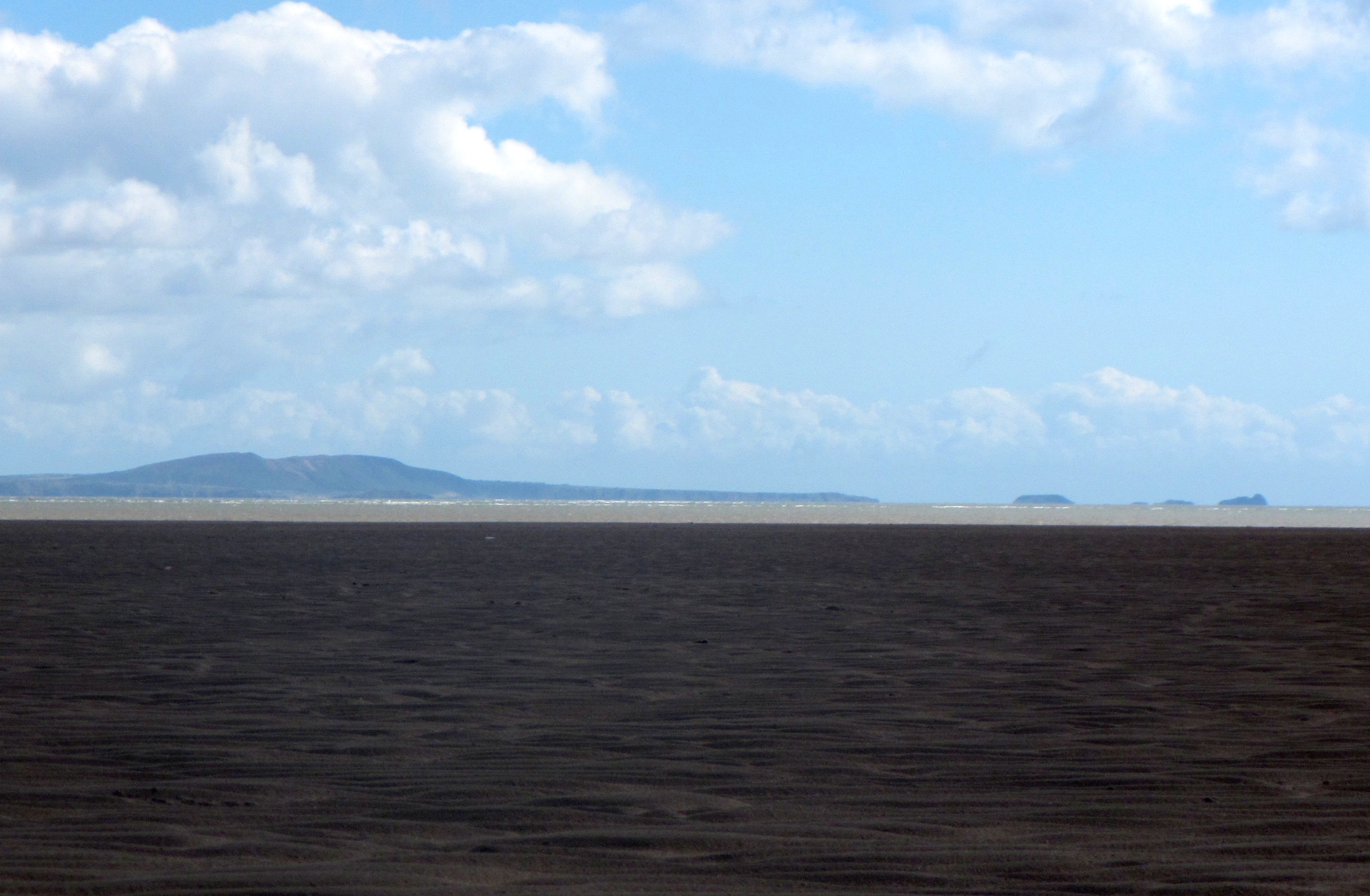
Rhossili from Pendine Sands

Skirting the edge of an MoD firing range, I emerged on the very tip of the Laugharne estuary. Laying my bike down in the long grass, I walked out on to Pendine sands. To my left the sea swept in to meet the river Taf as it flowed past St Clears and Dylan Thomas’ Laugharne. Ahead of me across the waters was the split pyramid of Rhossilli Down and the long, rearing line of Worm’s Head. To my right, the bare flat expanse of sands swept along the coast as far as the eye could see. The monastic bulk of Bardsey Island was an offshore silhouette. Any human figures nearby were nothing but coloured dots on the great expanse of flat, hard sand.

At least I won’t have to change into my swimming costume underneath one of those awkward towel kilts, I thought approvingly. Then, inevitably: If the beach is this deserted, do I really need a swimming costume?

It wasn’t even the most unusual thing I’d done that day.


IMG_0668
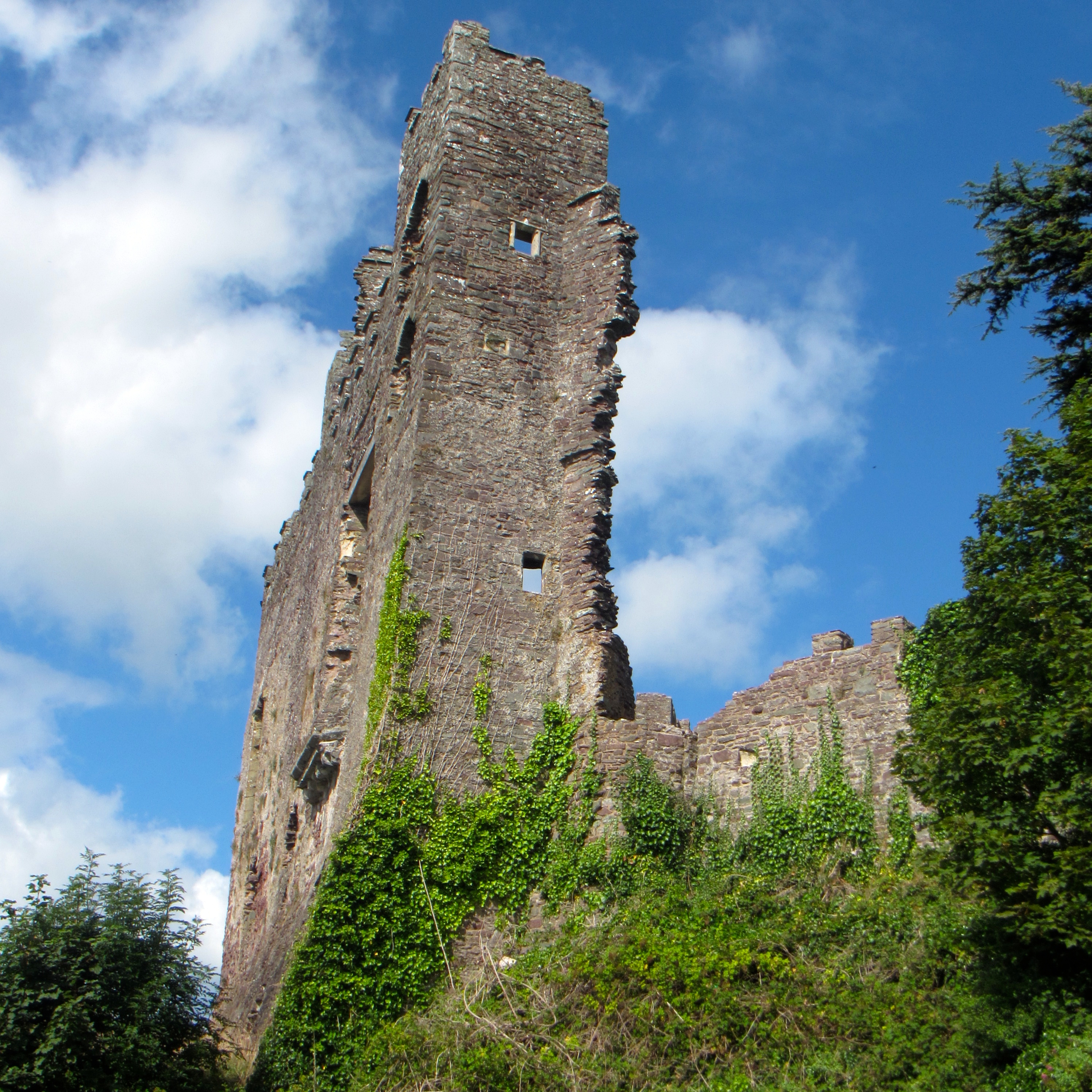
Laugharne Castle

2014 is Dylan Thomas’ centenary year, and the whole of South Wales has been putting on events to celebrate the life of her most famous poet. I’d spent a fun weekend previously exploring the sites of his Swansea childhood, but the lack of easy public transport to Laugharne had always put me off exploring the famous house of his great late poems. I had a friend in the Dylan Thomas Boathouse, however, who’d offered to show me round, I’d been meaning to get back into doing a few long, exploratory cycle routes, and one Sunday I found myself with nothing to do. So I set my alarm clock for the perverse hour of 5:30am, and made the 7:10 train to Carmarthen.

It was a hilarious train, full of bleary drunken wrecks from Neath and Port Talbot who’d obviously gone into Cardiff to party on Saturday night and never gone to bed. They were extremely noisy, then comatose, then shambling suddenly out when we pulled into their station.

I emerged at Carmarthen, and set off promptly westward, towards St Clears. Typically of the consideration that road planners show to cyclists, there was a bike route running along the north side of the A40 for roughly three-quarters of the way to St Clears, and the Celtic trail on the south side – but did they meet in the middle? No, that would have been too easy. Instead I had the choice of a long and mountainous detour or a mile of unpleasant cycling along the hard shoulder of a dual carriageway. The detour was marginally the worse option, but once I’d made it into St Clears, it was a shorter, quieter southward haul. One more nightmare hill and I was freewheeling from Cross Inn downhill into shoreside Laugharne.

IMG_0690
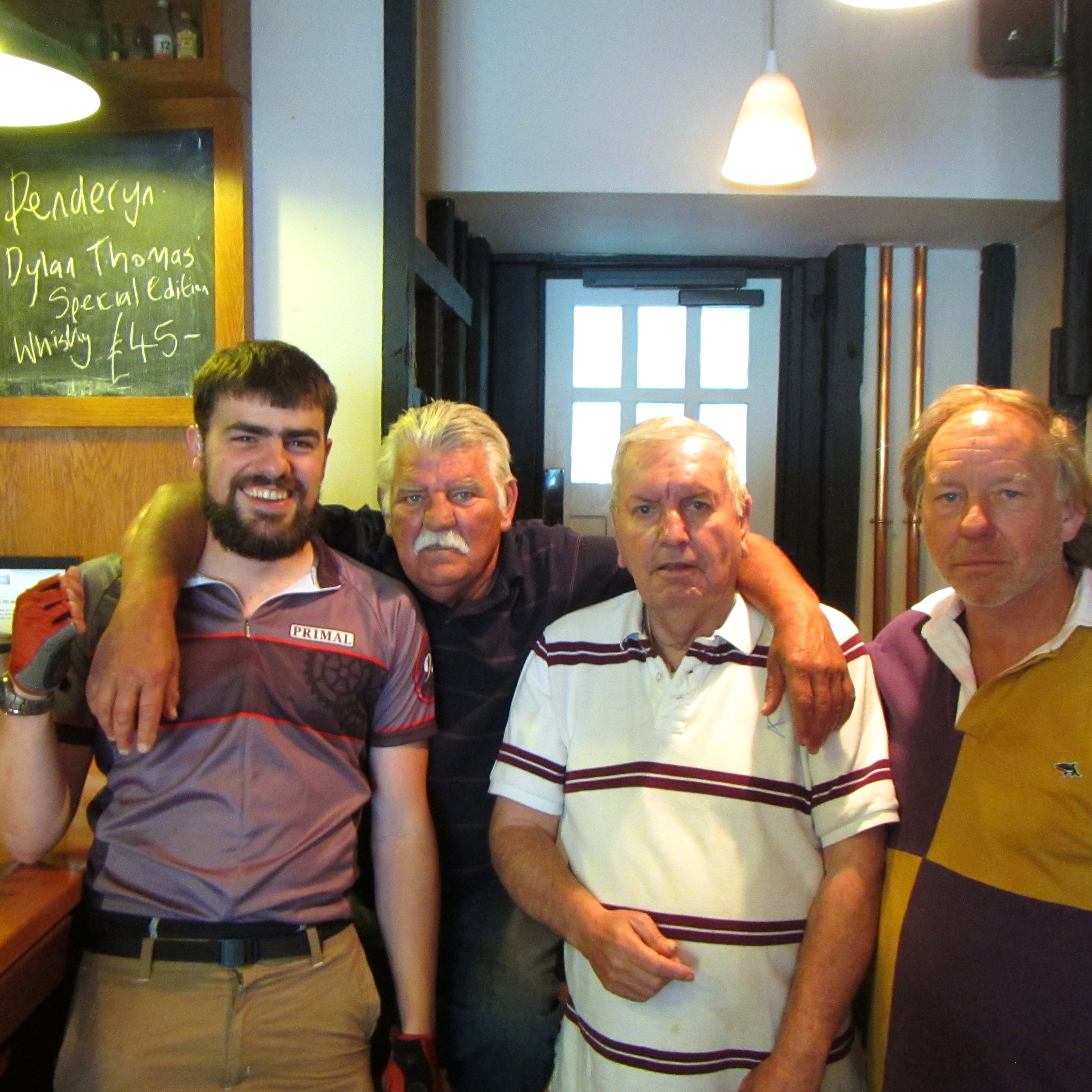
The Boys of Brown’s Hotel

You know how sometimes you go to places you’ve read about, seen on TV and visited many times in your imagination? And when you get there it’s grey and drizzly and full of litter and unhappy people? Laugharne was nothing like that. Clouds scudded across the sun now and again, but the windfall light of the day was exactly that which gleams in Dylan’s poems. Sir John’s Hill, on the headland, was exactly as I’d imagined it; the Boathouse itself was exactly the ‘house on stilts high among beaks and palavers of birds’, ‘by full tilt river and switchback sea’. I went for an afternoon drink in Brown’s Hotel, one of Dylan Thomas’ favourite watering holes, and shared a pint with a group of men who appeared to have escaped from the pages of Under Milk Wood circa 1950, and defied all efforts to corral them in again. And there were surprises, too: Laugharne Castle, which no poem or memoir had warned me of, was a wonderful rambling boys-own ruin to scramble across.

IMG_0678
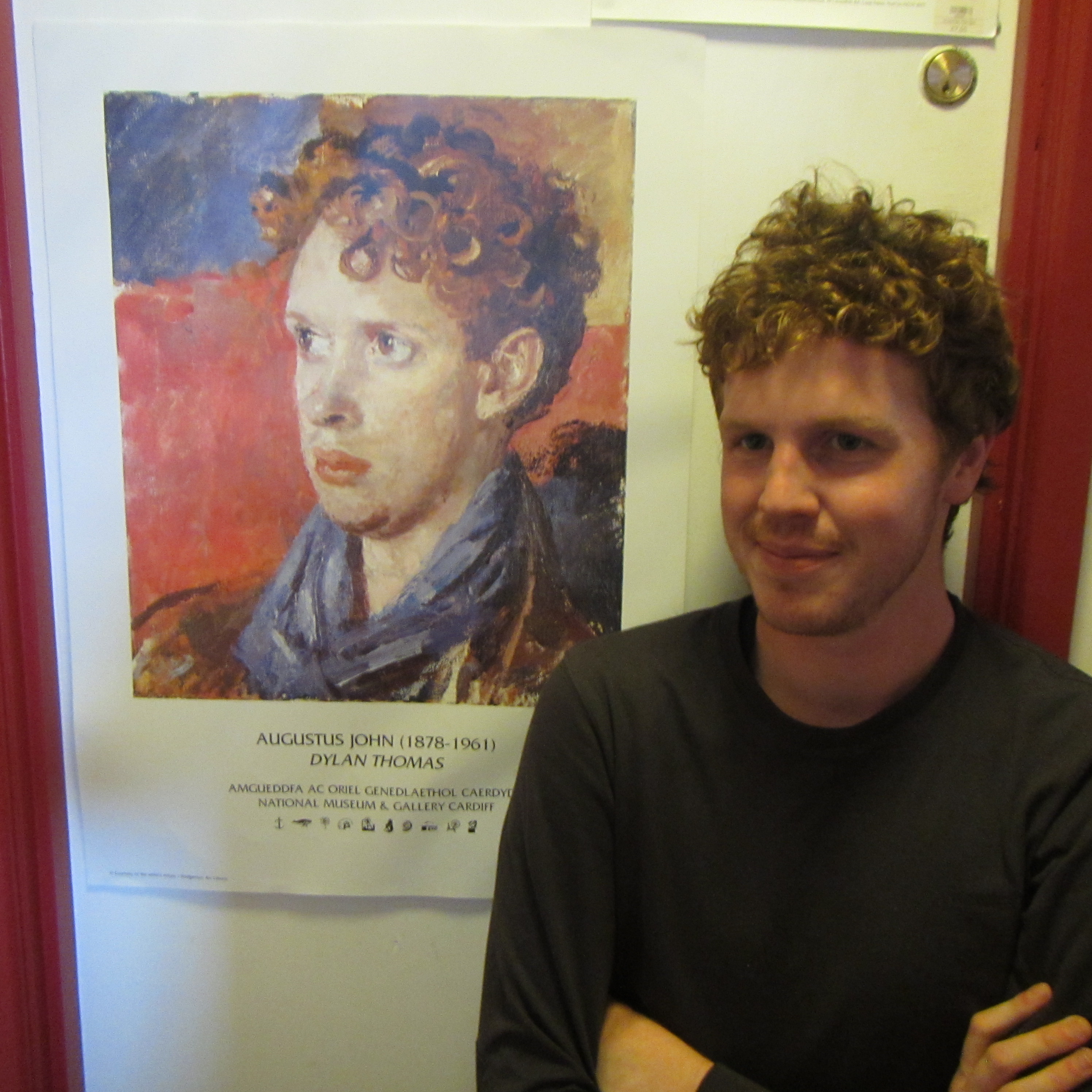
Kieran and Dylan Thomas. See the resemblance?

I’m fortunate enough to have studied English Literature at University with Kieran, who works at the Boathouse. He bears such an uncanny resemblance to the Augustus John portrait of Thomas that one is tempted to enquire into the amours of his grandmothers. Thanks to him, I got to look around for free, a free espresso and a batch of welsh cakes wrapped in tinfoil. He subjected me to a Dylan Thomas quiz, which I failed miserably, and advised me to cycle further on to Pendine sands and take my swim there, rather than use the murkier waters of the estuary.

To the end of his life, Dylan Thomas was proud of his running prowess, having won the ‘Swansea Mile’ race when he was 14. It needs more research than I’m prepared to do for this blog to determine whether he was much of a swimmer, as well. One tends to imagine him with his limbs sprawling out of the bath, the typewriter plonked on his stomach and a cigarette lolling out of his mouth, not breasting the choppy Welsh sea with a strong front crawl. But his poems are full of the primal energy of the ‘tusked, ramshackling sea’ ‘that hides his secret selves deep in its black base bones,’ and in his short stories and memoirs you often find him beside Rhossilli, or Swansea Bay, exulting in the wildness of the waves or treasuring a sullen Byronic melancholy. The long horizons of Pendine Sands dwarfed and daunted me, too long and flat for my weak strain of poetry to take much purchase, but I felt sure Dylan would have struck an attitude fit for it.

Naked I plunged into the greyish, leek-and-potato sea, and did a few strokes out and back, secure in the opaque waves as a dog-walking jogger grew from a dot to a pin to a person and shrank back again to a dot. Once I was safe, I emerged and jogged speedily towards my clothes, foolishly left a good way out of the water’s reach, and part-buried in spindrift sand. After I’d shaken the sand from my cycling shorts, pulled on a t-shirt and munched a few welsh cakes, I set off back towards Carmarthen. As I left Laugharne behind me once again, I heard three shrill skyborne cries, and twisted my neck to see a hawk hovering above me. Like everything in Laugharne, it seemed to have leapt straight from Dylan Thomas’ imagination into the modern day.

Over Sir John’s Hill
The hawk on fire hangs still;
In a hoisted cloud, at drop of dusk, he pulls to his claws
And gallows, up the rays of his eyes the small birds of the bay
And the shrill child’s play
Wars
Of the sparrows and such who swan sing, dusk, in wrangling hedges.

Conversations with Strangers: The Tobey Maguire story

NZ-LA 054It was my last day in LA, at the tail end of my round the world trip, and I woke up at 6am in a hostel in Santa Monica. The jet lag was insistent. I knew rolling over wouldn’t do me any good, so I heaved my carcass out of the top bunk, dressed silently, and headed out to face the day, or as much of it as was currently awake.

There was one girl in the hostel lounge, working on her laptop. I asked her where she was jet-lagged from. Central America, she said. She turned out to be Catherine Shehadie, from Oz, and I turned out to be Tom Tyrrell from Britain. She was a curly-haired girl with mirror-bright blue eyes, and we hit it off – I’d been a sucker for bright eyes all trip. We discovered we were both flying home that day, albeit in opposite directions, and we had the morning spare. We decided to hang out.

December in LA didn’t feel a lot different from the New Zealand spring I’d been running around in for the last few months – at least, until night slammed down at 4pm and the cold winds blew in. Typically, it was the hottest it had been all week, and I was stuck in trousers and walking boots, and my swimming trunks and towel were all packed away till I got home. Instead, we walked along Santa Monica pier, then nipped down to the beachfront.

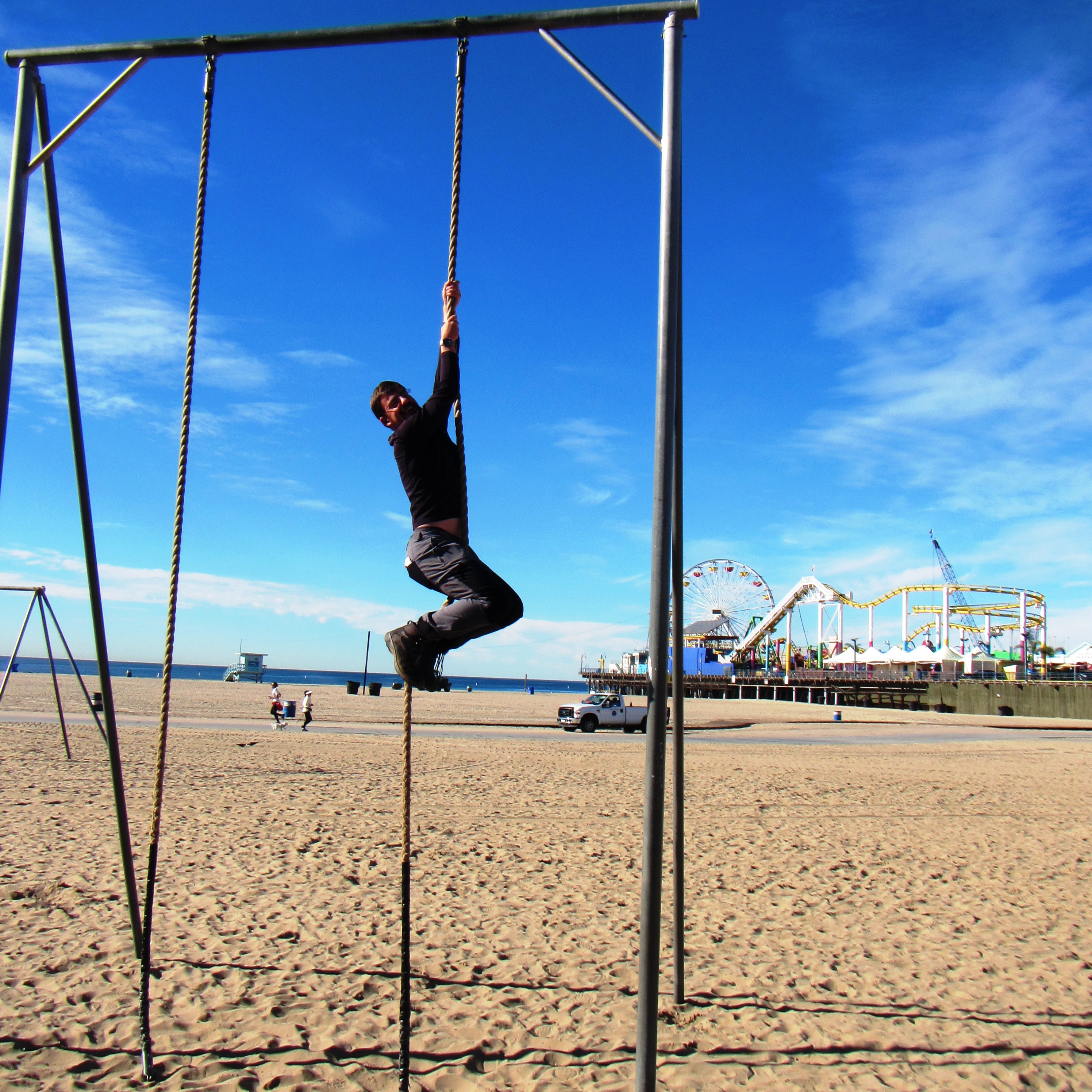
???????????????????????????????I hadn’t expected much from Muscle Beach, but it had turned out to be a highlight. Instead of over-inflated bodybuilders pumping iron, what you mostly saw were young wiry people swinging down these massive arcades of rings, like Lara Croft or the Prince of Persia in the video games, doing things you never expected to see in reality. To amuse Catherine, I made it most of the way up a rope and swung from a few of the rings – which was easier than it looked, if you didn’t mind looking like a sack of potatoes.

Down the beach was a film crew, filming Pawn Sacrifice with Live Schreiber – or so we were told by a bit part player, an older guy named Pierce, who was looking unpleasantly warm in his 60’s three-piece suit. He handed a couple of the bottles of water they were giving out to the crew, and told us his Tobey Maguire story. It was evidently a well-polished Hollywood tale, but it amused the hell out of us.

“I was doing a Stand Up To Cancer advert with Tobey Maguire and about 500 extras.” he says. “We were all packed into this massive stadium and only a certain number of us can get paid, so I got in the line for that. I get to the front, and the first assistant director doesn’t even look up at me. He keeps his eyes on his notes and he barks ‘Name!’ Just like that.

I’m a little annoyed by this, so I say ‘George Clooney.’ And he looks up, and fixes me with a dirty glare and says ‘Funny. Name?’ So I shrug and I give him mine and then I go sit down, halfway up in this massive stadium. And half an hour later they’re filming Tobey Maguire, and they need someone to sit beside him. So the first AD turns to the crowd and yells through the microphone ‘Hey, George Clooney, get down here!’ At which point this whole audience of 500 people – 200 of them women – starts craning around to look for me. And I had to get up and walk down to the stage, all through them, while they were going Where is he? Where is he? Is that him? Nah, that’s nobody. That was the only time I disappointed 200 women at once. Mostly I do it one at a time.”

Conversations with Strangers: The Possessed Budgie

One hot Saturday when I had nothing to do, I decided to see how far north I could get by hitch-hiking. Starting in Cardiff, I caught my first lift to Merthyr Tydfil with a property lawyer called Dai, then a very boring ex-infantry sergeant dropped me off outside Brecon, then a man from Hay-on-Wye dropped me off at the Talgarth crossroads, and then I got a lift from an American called Doug, who was getting extremely lost in the footsteps of William Wordsworth. (Somewhat to my surprise, I’ve turned up in his blog.) He was going to Bala.

I’ve never been to Bala, I thought. I might go to Bala too.

True to form, we took a wrong turn up the Elan Valley, and after several spectacular dams, reservoirs and mountain roads we wound up in Aberystwyth! Undaunted, we set off to the north-east, and Doug dropped me off in Bala town centre just after 6pm. I caught a lift out of town and camped for the night in a field three miles outside Bala, among caravans, campervans and behemoth tents set up to sleep whole families, where my little 35 litre rucksack, two man tent and miniature stove made me like Gulliver among the Brobingnagians.

Next day I walked for half an hour until I found a lay-by on the right side of the road and wrote where I wanted to go on my whiteboard – an invaluable hitch-hiking tool. It would have looked something like this:

IMG_0583

Another half-hour passed waving my thumb fruitlessly at the sparse traffic, and I was just thinking of writing ‘Dolgellau’ on the other side of my whiteboard and trying to hitch both ways, when a car pulled in. Quite a nice one, I noticed, scrambling in. Roomy, with a couple of cool accessories like a waste paper bin strapped to the gearbox, and a dream catcher dangling from the rear view mirror – ornamental, since the car didn’t look slept in. The driver introduced himself as Joe. He was bald, with dark glasses, a voice that managed to be simultaneously gravelly and camp and various tattoos, most notable of which were the four Chinese dragons spiralling around his left leg, symbolising the elements of earth, air, fire and water. He was quite cagey about what he did, beyond mentioning that he was semi-retired, and I wondered at first if he was some kind of minor rockstar I ought to know about. He reminded me of a distant relative who was part of The Scaffold, now best known for Lily the Pink. We chatted for a while about old Clint Eastwood movies and silly hats, and some way down the road he told me he was a psychic medium, and was just returning from a weekend visit to another psychic medium in Dolgellau.

I wondered where to take the conversation from here. Some would rate mediums worse than con-men. I come from a sceptic background – my father was not so much a lapsed Catholic as one who was never convinced in the first place. Thanks to Dad (and Douglas Adams) I grew up as a stout materialist, an agnostic verging on the atheist, and without feeling any particular need for a spiritual dimension in my life. Then again, I had a lot of friends who believed wholeheartedly in a spiritual dimension; a great admiration for the stories of Alan Moore and Grant Morrison, an occultist and a chaos magician respectively, and a determination not to offend my lift. Not that Joe seemed easily offended – in fact, he was a terrible tease.

‘So what do mediums talk about, when they get together?’ I asked, hoping for some professional gossip.

‘Dead people, mostly.’

‘Mmm.’ It would be crass, surely, to ask him if he’d communed with Elvis, or any well-known celebrities. ‘Do you have a good ghost story? Or is that kind of thing beneath you?’

‘I don’t have a ghost story, no. I do have a good possession story.’

Like any aspiring writer I listened eagerly, ready to plagiarise any gory details.

‘I got a call once from a woman down in Rhyl who had a possessed budgie.’

‘A possessed what?

‘A possessed budgie. Now, just because I believe in the spirit world and the efficacy of certain essential oils doesn’t mean that my first thought wasn’t this woman is completely off her rocker. But I went down to Rhyl, and I met up with her and her husband in a car park – they were spiritualists like me – and they seemed perfectly sane. So I went back to their flat – perfectly ordinary place. The budgie’s tweeting away merrily in its cage, and the only odd thing was the stack of tapes in front of the TV.

“You can watch those, if you like,” said the woman. “They’ll back me up.”

What had happened is that her father used to own the budgie until he passed away, maybe a year ago. He’d always told her that when he’d passed on, he’d try and contact her, if it was possible, from the other side. The budgie stayed in her father’s flat for about three weeks while she sorted out the legacies, and then it came home with her. And about a week later, it started talking to her in her father’s voice.’

‘Can budgies talk?’ I asked, ‘I thought it was only parrots.’

‘No, budgies talk fine with a bit of training – so it was talking in her father’s voice, which wasn’t that surprising, but it was calling her by name, and it was saying things like “I told you I’d reach you, didn’t I?” Now you’re thinking he taught the budgie to say that before he died, aren’t you? So was I. But that wasn’t the whole story.

Maybe a month later, it started saying other things. Nasty things. Swearing at her, threatening her, telling her she was going to die. Really awful stuff. When she let it out of its cage it would start pecking her, dive-bombing her, attacking her.

I watched a few of the videos, and then I sat down with her and said that there might be an everyday explanation, but it could be that it was a negative spirit that had possessed the budgie and used her affection for her father and her belief in the supernatural as a way in. Once it had built up enough trust and affection to mess with her head, it started misbehaving.

“Why don’t you just shut the fuck up!” said the budgie. I jumped about a foot. It was the first thing it had said the whole time I’d been there. That pretty much settled it for us both.

She asked me what to do with it. I said throw it on the fire, but she wouldn’t do that, so I told her to give it away, but not to tell anyone about the negative spirit. Just say that it was your father’s, and you don’t want it any more. That way the spirit won’t have a psychological foothold, and won’t be able to bother anyone.

And that’s what she did.’

‘So someone in Rhyl still owns a possessed budgie?’ I asked.

Joe shrugged. ‘I guess so. It’s harmless, of course.’

Long after he’d dropped me off, I was trying to think of a rational explanation. Had the father planned the whole thing as a sick joke? Did the budgie learn the language off the TV? Was the husband, barely mentioned in Joe’s story, a more important character than he’d appeared? I loved the way the story sounded ludicrous at first, but built slowly to the point where you thought ‘yeah, I would be freaked out if this happened to me.’

Sadly, a quick google search revealed that Katey and Her Possessed Budgie, by Brian Curtin, has already cornered the market in the literature of the avian uncanny.

No, that is really a book.

I’ve got my own stories to write, in any case. But if you’re living in Rhyl, and your budgie’s head keeps turning 360 degrees on its neck and vomiting pea soup – you know who to call…

Conversations with Strangers: The Forager

50 Since I started this blog in December 2013 I’ve written 50 blogposts and achieved 7300 views from all around the world, including Indonesia, Iraq and Vatican City. This would be the ideal point to look back, evaluate and reminisce, and such indeed was my original purpose, before I remembered how much I hate writing self-reflexive articles. True though it may be that the unexamined life is not worth living, I’ve never enjoyed doing it in front of an audience. I keep a journal for that, now well into its ninth volume, and woe betide he who peruses it without permission! So it is with some delight I have tossed aside my projected plan of discussing the motives that led me to begin blogging, complaining about how much I hate taking photos – the worst part of the blog – and trying to impose a retroactive rationale on a rattlebag of miscellaneous writing that incorporates anecdotes, poetry readings and academic conference reports, on topics as varied as astronomy, wild swimming, flying a glider, the Homeric translations of George Chapman and the embarrassments of taking a tramp home after a beer festival.

Instead, here’s an interesting conversation I had with a complete stranger.


… Over the bridge, a couple of people had vaulted the railings and were browsing on the blackberry bushes sloping down to the edge of the Taff, that mostly flows grey, brown or greasy green, but in these hot summer days had grown so clear that its rocky bottom was just visible through the weed.

– Found any juicy ones? I inquired, leaning against the railings.

The girl looked up. – They’re all a bit sour at the moment.

A green stripe varied the blonde hair that curved down her cheek toward her chin, and her bare bronzed arms were daubed with abstract colour, worked into her skin with the needle’s point, striped white also with the fainter mark of thorns. Her friend or boyfriend, with similar tattoos and a wild tangle of hair and beard, never spoke.

– Everything is coming into season about three weeks early this year, I observed, but even so I’d give the blackberries till the end of the month.

– Want to try one? she said, extending a purple hand. I picked the largest, dark, plump and softly bobbled; still my mouth filled with the familiar bitterness of a berry a few weeks under-ripe.

– No, not quite there. Have you ever tried making blackberry gin?

– We’ve done blackberry vodka.

– Does it still go that wonderful blood colour?

– Oh yes. Tastes great with cloudy apple juice.

– I like doing mine as a gin and tonic – then it bubbles upwards into a foaming glass of gore! I’m looking forward to laying in a stock for Halloween. Have you ever made nettle tea?

– No, but I made a chickpea and nettle curry the other day. It’s very versatile. I use it instead of spinach in a couple of recipes.

– Really? I’ve done it up with butter and pepper before, but it just tasted of pepper and butter. Kind of flavourless. Ah, just like…

-Just like spinach, yes. Bute Park’s a really good place for foraging. Her gaze roamed beyond me, upriver and down. There’s a big patch of elderflower over there. We made a ton of cordial. And there’s wild garlic and dandelion for salads.

She was eating up the rest of the blackberries from the palm of her hand as we spoke. Her friend or boyfriend found a little worm in his last, and threw it away. Then, not without awkwardness, they climbed back over the railings.

– See you when they come into season, I guess.

Ode to my study carrel

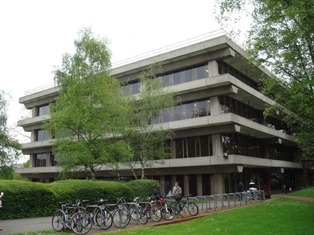
assl Nothing is quite as exciting as having a new library to explore, and I’ve been granted access to some good ones of late – Chawton House Library, a women’s studies centre set in a house which once belonged to Jane Austen’s richer brother; the high shelves and Victorian stepladders of York Minster Library; dozens of beautiful old Carnegie Libraries from Clitheroe to Cathays; even the high Medieval surroundings of the Bodleian Library in Oxford, thanks to a Postgraduate Studentship and the fact my supervisor emailed ahead. Yet despite all their glorious architecture, surroundings, and selection, none of them have usurped that place in my heart reserved for the drab concrete outlines of Cardiff University’s Arts and Social Sciences Library, where I now have a small office to myself.

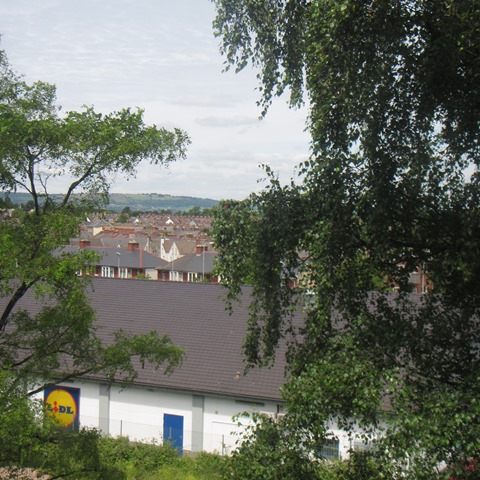
When I first applied for a study carrel I suspected that it was a word entirely invented by librarians – indeed, who better to do so? – but I made recourse to the OED and discovered that it is precisely the appropriate word for what it is – a small desk for private study within a library. Cardiff University’s Arts and Social Sciences Library boasts a row of eight on their second floor, which are given to MA and PhD students on 3-month rotas. Bute library may have the spiral staircases and the Science library the Victorian neo-classical flourishes – at least, before they stuck an entire unnecessary floor right through the middle of it – but none of them have anything so useful as the study carrels. At first glance, they maybe rather poky and predominantly brown, with a view of the Lidl car park, but such an opinion is IMG_0562 sole preserve of the philistine who has not grasped the delight of having one’s own private space in the midst of a library. Safe behind my yale lock, I can actually stack my books in there without fear of some overzealous librarian returning them to shelf, leave my laptop or phone on the desk without fear that anyone might nick it and best of all, I can sit on the floor, or put my feet up on the desk, or roll into the footwell and doze off without anyone looking at me strangely. The view may not be the most sublime in existence, but mediated by the swaying birches and their million new leaves, it’s rather pleasant. Even then, it doesn’t take a lot of craning before I achieve a sightline across the thousand chimney tops of Cathays stretching out towards the Rhymney Ridgeway.

Cardiff University gave me access to my first university library, and after months spent scouring the secondhand bookshops of Winchester to build a poetry collection, I can still remember the thrill of discovering that they had collections by almost any author I could think of. I’d arrive, tap ‘Thomas Gray’ or ‘Gerald Manley Hopkins’ into the search engine, memorise the local reference and dash upstairs, chanting ‘PR4803.H44.A16.F80’ under my breath and hoping I’d get there before the rush. I often got my digits muddled up, but surprisingly enough, there’s yet to be a run on the literature shelves. The closest thing to it is when the first year essay titles are announced, and the shelves of Beowulf and Chaucer criticism empty as if by magic.

IMG_0565 For there’s still magic among these dusty shelves, even in a warm day in May. Since my first days at Cardiff, I’ve studied in places as diverse as the British Library and the Bodleian at Oxford. Even York University library had more power sockets, comfier seats, continuous 24 hour access and a better DVD collection. I still keep up my self-initiated tradition of jogging up the stairs, however, and there’s still nothing I like better than when a likely tome catches my eye mid-stride, and I have to take it out and flick through it until the original book I was searching for is quite forgotten. Having my own little piece of it – however temporarily – is like having my own box at the theatre. Sheer class.

The Drunk Samaritan

keep your coinsThere’s a Philip Larkin poem (beautiful because true) to the effect that people make selflessness sound uplifting and inspiring and fulfilling, while in reality selfishness feels like sitting by the fireside with a good drink and good music and selflessness feels like hanging around a hospital waiting room in an ill-fitting suit. This will always be epitomised for me in the night I let a homeless man sleep on my floor.

I was behind the bar at the Great Welsh Beer Festival in Cardiff’s Millenium Stadium, familiarising myself with my stock like any good publican, while faithfully observing the prime directive of not drinking more than you serve – which wasn’t saying much, admittedly, on a busy Saturday evening. I was also somewhat maudlin, having just heard on the grapevine that a girl I used to love had moved in with someone I used to think of as my best friend. I haven’t seen either of them in years, admittedly, but I was having a bad week and the news threw me into a state of abject romantic self-pity. After the festival finished, I was walking home through the park at about 3am, when I blurted out something like ‘Ah me! I am a most unhappy man!’ Here I was accosted by a friendly drunk sitting on a nearby tree stump. He graciously offered me a can of Stella – not my usual tipple, but I never look a gift horse in the mouth – and we treated each other to a litany of our respective woes: romantic desolation and homeless alcoholism. We hit it off so well, in fact, that on finding out he had nowhere to sleep it seemed the most natural thing in the world to offer him a spot on my living room floor for the night.

‘This never really happens,’ he said.

‘Really?’ I said. ‘Can’t think why.’

I staggered back home beside him, fished out my sleeping bag and roll mat from behind the sofa, and left him to it.

Waking up the morning after a good night out, there’s always a pleasant few minutes in which to unpick dream from reality and filter out what memories the tides of wine, ale, and spirits haven’t washed away. It’s this that determines whether I’ll be chuckling over great wit, silliness and conversation for the rest of the day, kicking myself for being such a vulgar idiot, or merely scratching my head and wondering how I got home, or some other enigma. There’s one girl I still can’t remember if I kissed on a night out or if I merely dreamt I did. I’ve never had the courage to ask her which.

I put it to you, said my newly reawakened Reason, that you let a homeless stranger and professed alcoholic sleep on your living room floor.

Surely not, said I. Alcohol makes me a complete idiot, to be sure, but surely not that much of an idiot.

I put it to you, said Reason, that you go and see for yourself.

I peeked into the living room. There was a homeless guy sleeping on my floor. I gulped. And went to take a shower.

By the time I was washed and dressed my guest was awake. Rhys – for such was his name – was in his late forties, and surprisingly well dressed. He wore a shirt, a white jacket and light jeans, none of them stained, his hair was orderly, his chin stubbly but not beyond the bounds of fashion. Aside from the fact that he was drinking his first beer of the day at eight o’clock in the morning, you wouldn’t have looked at him twice.

‘Do you want any tea?’ I asked.

‘No thank you.’ he said. ‘Sorry about the beer, but I need it. I’m an alcoholic.’

I nodded sagely, and set about fortifying myself with earl grey, toast and marmalade, after which things would presumably become easier to cope with. Having offered him hospitality, the main problem was how to get him out of the house without being rude. I looked out at the thickening downpour barraging the patio. At least I’d saved him from waking up in the middle of it.

Rhys fixed one of my drawers while I ate my breakfast, and was thankful for the night’s rest. He did have a USB stick on which he insisted on showing me pictures of his daughter, but his daughter turned out to be surprisingly hot.

‘She has beautiful eyes,’ I said, diplomatically.

When I left for the university he left with me, and we went our separate ways. He thanked me again for my drunken generosity; I advised him to try and kick the alcoholism, but I doubt I had much effect. I haven’t seen him again.

I got back to my house later and tidied up. Nothing was missing, nothing was stolen. I did need to mop out the bathroom, because he was somewhat inaccurate – but who among us can claim to be faultless in this regard? In despite of having done my good turn for the day in true boy scout fashion, I felt embarrassed, uncertain and awkward, and I wouldn’t be stupid enough to do it again – but then I suppose that’s how everyone feels, all the way back to the good Samaritan and the man who fell among thieves.

Crossing the Line: Ritual and Superstition at Sea

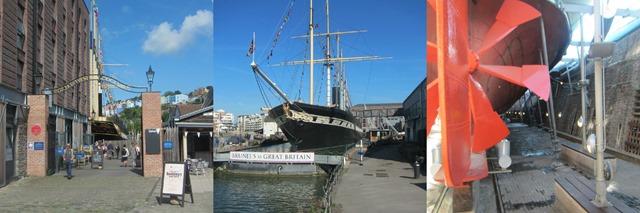
ssgb My first academic paper, delivered at a conference at Dove Cottage in Grasmere, set a high standard for atmospheric locales. When I received a call for papers for a conference taking place at Isambard Kingdom Brunel’s SS Great Britain in Bristol, I knew I had to go. The subject, Crossing the Line: Ritual and Superstition at Sea didn’t quite fit with my PhD thesis on Milton’s Eighteenth Century Influence, but I had some old research lying around from my BA dissertation that fitted the bill.

I swiftly concocted an abstract for a paper entitled Edgar Allan Poe on Ice: Fictionalising Arctic Masque and Ritual in Dan Simmons’ The Terror and was delighted to have it accepted. After an all too brief period of revamping, rewriting and further researching, I took the train down to Bristol on a sunny Thursday morning.

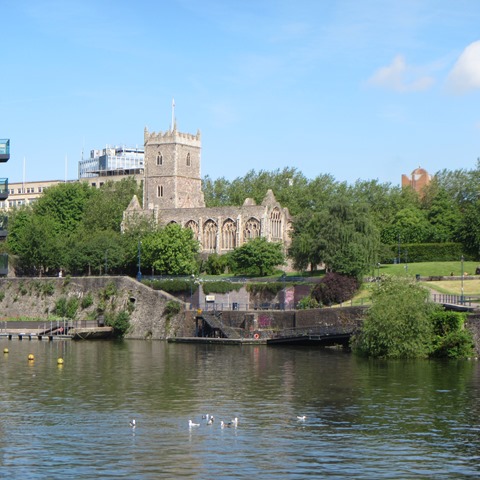
IMG_0514 A brief confession – I always get lost in Bristol. It’s a city of sharp corners, sudden ups and downs, suspiciously similar brick buildings and awkward waterways. Matters are usually not helped by a pint or two of something tasting innocuously of apple juice and the fact that the last train back to Cardiff, in a quirk of the schedules, leaves at 01:37 in the morning. This time, however, I managed to thwart my natural haplessness by simply following the river Avon, after a brief confusion over whether I should go upstream or down, and arrived at the SS Great Britain in tolerably good time. The conference organiser, Laurence Publicover, gave me the hearty welcome due to the only speaker not personally shepherded over from Bristol University.

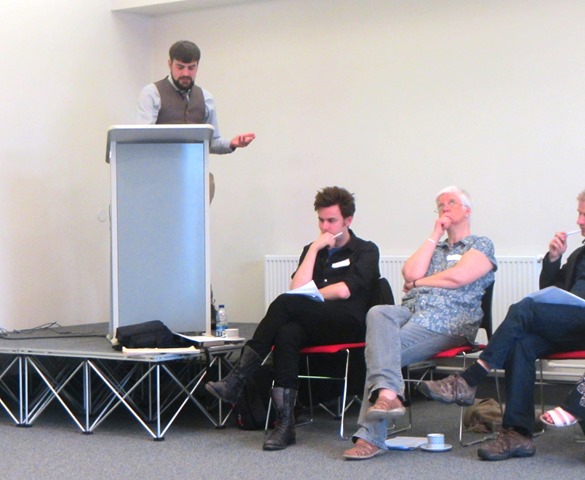
We were in the Viridor Theatre, part of the Brunel Institute, which looks out onto the port side of the SS Great Britain; a wonderful place to take tea and make friends. The conference began with four papers: Jimmy Packham presented a paper entitled “The aweful ceremonies of the Equator”: Reaching the Line in the Nineteenth Century which impressed me by the grand literary-historical scope of its narration, drawing in Darwin’s Voyage of the Beagle, The Rime of the Ancient Mariner and Mark Twain’s diaries. Claire Connor’s paper on “Crossing the Line” The SS Great Britain and Mid-Voyage Violence was a more detailed look at the crossing the line ceremony in the history of the ship’s voyages, and introduced us to various passenger diaries and the tantalising mystery of the gummed-together page in the ship’s log. Tasmin Badcoe followed us with “All the devils are here”: Crossing  Unholy Waters in the Early Modern Imagination which began appropriately with the opening of The Tempest and took us through some wonderfully far-out renaissance texts. Then it was my turn. I apologised in advance for the truly sailor-like language of my quotations, but secretly I rather enjoyed that, and couldn’t resist unleashing my am-dram side while quoting the marvellously resonant final lines of Edgar Allan Poe’s The Masque of the Red Death. I even managed to handle the questions that followed with easy fluency instead of my usual stammering and fluffing, and stepped out of the spotlight happily conscious that my somewhat thrown-together paper had succeeded better than I’d hoped.

After lunch we had a round table discussion with the shellbacks, as those who have crossed the line and been initiated by Neptune are subsequently called. One older man recalled a serious hazing that involved being locked into a pigsty, lathered over in a revolting mixture of paint and tar and shaved with a blunt razor, while another in a modern yachting team recalled a kind of food fight where they all threw mashed up Weetabix over each other. The highlight was definitely the naval serviceman who produced the instructions and script for the crossing the line ceremony from the appropriate service manual – ‘because in the Navy there’s a manual for everything.’ Finally the curators of the Brunel Institute presented their own research, which showed, intriguingly enough, that the scope and rowdiness of the crossing the line ceremony was steadily scaled down during the lifetime of Captain John Gray of the SS Great Britain, though they were unable to say quite why.

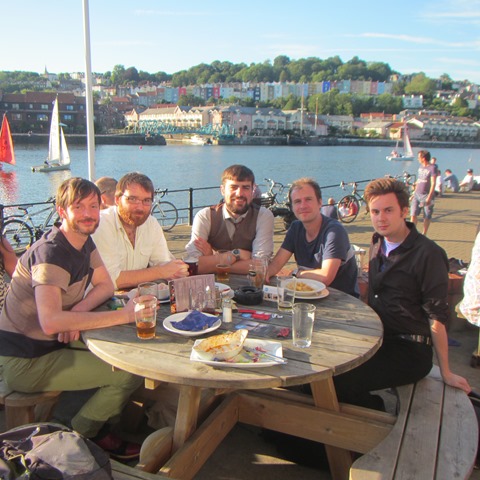
IMG_0534 There was time remaining after the conference to explore the SS Great Britain and its surrounding exhibitions, but not, unfortunately, to climb the mainmast yard. Sunset found me bathing my feet in the cool waters of the Avon while sharing a few bottles of rosé with Bristol’s Perspectives from the Sea research group, whose brainchild this conference had been. The waters before us, once thronged with ships of the empire sailing to and from every coastline on Earth were filled with paddleboarders and sculling teams and sailboats going about. It was a perfect evening. By dint of fast walking and diligent inquiry, I even found my way back to the station in time to catch the 11 o’clock train home – and that’s unheard of.