Oh, you tease

Teaser trailers are getting stingier. True, they were always meant to tantalise us with a few seconds of footage from films and TV programmes we wouldn’t get to see for months, but as studio execs get slicker at viral marketing and riding the hype whilst keeping every bit of plot information they can under wraps, the teaser trailer is torn in two directions – revelation and secrecy. Too often, this becomes a pointless exercise in frustrating your audience.

To illustrate my point, let us return to the halcyon days of my youth – to the golden year of 2001, when two of my favourite books hit the big screen at once: Harry Potter and the Philosopher’s Stone, and Lord of the Rings: The Fellowship of the Ring.

At the time, I thought Harry Potter was the better movie. I was young and naieve. It’s still plain, however, that while the Lord of the Rings teaser is overloaded with exposition, the Harry Potter teaser contains everything a young fan might want to see without giving too much away – the letters swooping down the chimney! The Hogwarts Express! Hagrid! The Great Hall! Dumbledore! Snape! McGonagall! Harry, Ron, Hermione, and the tantalising prospect of Quidditch on the big screen! Nothing could be more exciting.

Fast forward to 2012, and the teaser for The Dark Knight Rises resembles something put out by one of those irritating people who fake trailers for new movies by splicing together footage from old ones. Some offcuts from Inception – a few clips from Batman Begins and The Dark Knight – while Commissioner Gordon wheezes something inaudible from a hospital bed. Even the blink-and-you’ll-miss-them appearances by Bane and the new Batman costume can’t save it.

It is possible to do this properly, as JJ. Abraham’s trailer for Star Trek (2009)showed. It contains no footage from the film we saw in cinemas – it doesn’t even tell you the name of the film. Yet, lifted as it is by marvellous sound design, Leonard Nimoy’s goose-pimply voice over and the surprise reveal, it’s a wonderful bit of cinema in its own right, and a concise introduction to the dynamic visual style of the Star Trek reboots.

The worst culprit is the most recent – the first teaser trailer for Doctor Who Series 8, the first season starring Peter Capaldi as the Doctor. Of the 15 seconds the trailer lasts, 10 of them are taken up with the Doctor Who logos that top and tail it. 2 of the remaining 6 seconds are taken up by staring at a dark screen. The other 3 seconds show a few frames of Peter Capaldi, standing in silhouette, against the TARDIS console. And that’s it. No monsters, no Daleks, no alien planets. No glimpse of the main characters in action – not even a proper look at the new Doctor’s costume, and photographs of that were released to the media months ago. Instead, a total waste of 30 seconds of my life.

(Yes, I played it twice.)
My favourite Homeric Hexameter

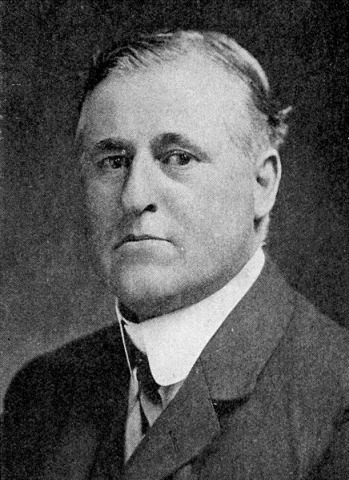
100_0659 Time has not done any favours for Sir William Watson. Time, in fact, has not served any of the patriotic verse writers of the early twentieth century particularly well, but Rudyard Kipling gets credit for hidden depths as well as sympathy for losing his son in World War One, and Henry Newbolt (‘Play up! Play up! And play the game!’) still gets quoted for British Imperial Poetry at its most jingoistic. The poetry of Sir William Watson, by contrast, was neither subtle or ambivalent enough to stand on its own merits, nor tasteless enough for notoriety. Born in 1858, he proved to be a staunch Victorian and literary conservative and could not or would not assimilate the increasingly influential modernist movement into his poetry. By the time of his death in 1935, his entry in the Oxford Dictionary of National Biography records that he was almost totally forgotten, and many were surprised that he had survived so long into the new century. He is now out of print, rarely anthologised and few even among academic specialists spare him a thought from day to day.

Such is literary fame. Some very few writers, like Shakespeare or Austen, may write volumes, and find that future generations will prize every word of them, and treasure every signature and trace they leave in the world. Others write volumes, and find of their hundreds of thousands of words a couple of poems survive, or a single book. Others may only contribute a single line or a phrase that bobs like a lonely spar on the surface of an ocean, into whose forgotten depths the edifice it was once part of has plunged without a trace. Some, like Sir William Watson, are almost completely forgotten – yet if I had to nominate a single line of his poetry to survive the cataclysm, I’d opt for the first line of his Hymn to the Sea:

Lover whose vehement kisses on lips irresponsive are squandered

This is a verse form called a Homeric, or Dactylic, Hexameter, consisting of a metrical foot of one stressed and two unstressed syllables, repeated six times. It is an English version of the Ancient Greek metre in which the Iliad and Odyssey were written, and one that proved to be bizarrely popular throughout the nineteenth century. The flaws of the English hexameter are obvious to anyone who tries to read or to write a such a poem – such as Coleridge, who complained:

All my hexameters fly, like stags pursued by the staghounds,
Breathless and panting, and ready to drop, yet flying still onwards,
I would full fain pull in my hard-mouthed runaway hunter ;
But our English Spondeans are clumsy yet impotent curb-reins ;
And so to make him go slowly, no way left have I but to lame him.

In English, it is a forced, unnatural metre, turgid, droningly repetitive, almost impossible to rhyme (though Swinburne made a good shot at it) and which owes its nineteenth century popularity entirely to the novelty and difficulty of the metre, and the cultural cachet of its Homeric associations. The most famous and readable works in it are Henry Wadsworth Longfellow’s Evangeline, and Robert Southey’s notorious A Vision of Judgement, which includes lines like:

Thus as I stood, the bell which awhile from its warning had rested,
Sent forth its note again, toll, toll, thro’ the silence of evening.

And which inspired a brilliant parody by Byron, in the far more expressive form of ottava rima.

Having found the dactyllic hexameter completely unsuited to the English language, it is surprising to find that in Sir William Watson’s line, it almost works. The poem as a whole quickly gets repetitive, but in the musical phrase

Lover whose vehement kisses on lips irresponsive are squandered

I can find what the English hexameter has universally lacked: the marriage of sound and sense. In the whispering of the repeated sibilance; in the crash of the opening stresses and the melancholy, long, withdrawing roar of the weaker syllables, there is something evocative of the very motion of the sea, the ‘tremulous cadence slow’ that haunts Arnold’s ‘Dover Beach’ and Tennyson’s ‘Passing the Bar’. Counterpointed by the strikingly original image of the sea imparting her passionate kisses to the land, it makes this single dactylic hexameter as close to perfect as the English language can make it. It is a line well worth remembering, and one which I do remember, every time I go down to the seashore.